What is a Dental Bridge?
There are several options for replacing missing teeth, including dental bridges. Closing the gap in your smile can help prevent problems with your existing teeth and gums, including driting, bone loss, difficulty chewing, or speech problems. Learn more about dental bridges to help you decide if this is the right restorative treatment for you.
What is a Dental Bridge?
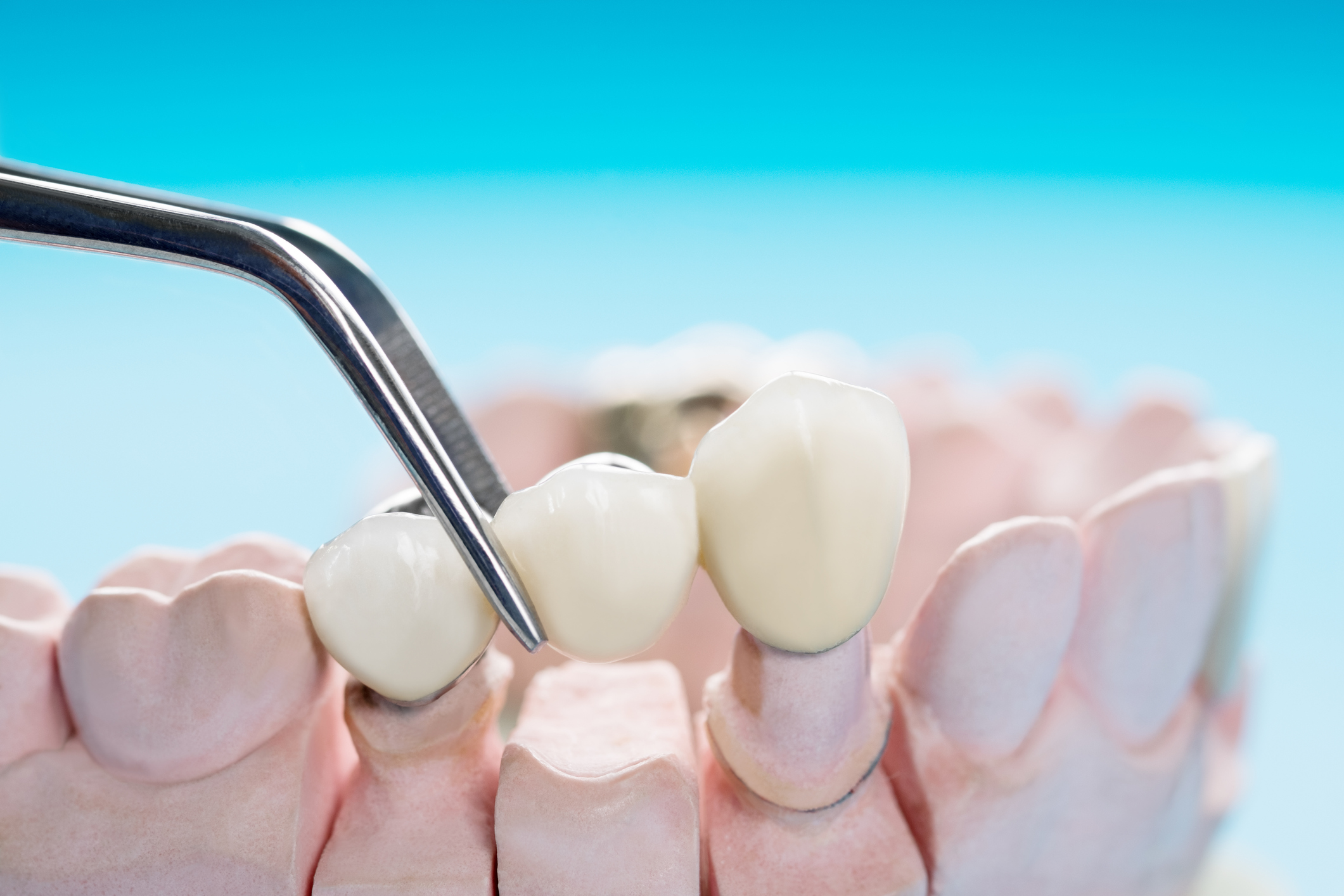
Dental bridges literally “bridge the gap” left by one or more missing teeth. A bridge is comprised of multiple parts:
- Crowns cap the teeth on either side of the gap, known as the abutment teeth.
- One or more false teeth, called pontics, are suspended between the crowns to replace the missing tooth or teeth.
- Crowns and pontics may be made of porcelain, alloys, gold, or other materials.
What is the Process of Receiving a Dental Bridge?
Your first visit with the dentist involves preparing the abutment teeth by removing some of the enamel. This creates room to place crowns, which serve as anchors for the pontic cemented between them.
During the same visit, your dentist takes an impression of your teeth to use as a model when creating custom pontics and crowns for your dental bridge. A temporary bridge protects your exposed teeth and gums until the permanent product is finished.
At your second appointment, the dentist removes the temporary bridge and puts the new pontic and crowns in place. Temporary cement ensures a comfortable fit. After a few weeks, you return to the dentist one final time to have the bridge firmly cemented in place.
Factors to Consider
When comparing bridges with other tooth-replacement options, keep these factors in mind:
- Time: You can complete the dental bridge process in two or three visits spaced within a few weeks of each other.
- Cost: While your insurance coverage determines what you pay out of pocket, bridges tend to be a middle-of-the-road option, with dentures costing less and implants costing more.
- Longevity: With excellent oral hygiene and regular checkups, dental bridges can last up to 15 years.
- Aesthetics: Pontics aren’t embedded in the gum line, so it may be possible to distinguish them from your natural teeth upon close inspection. For this reason, bridges often replace teeth toward the back of the mouth.
- Comfort: Bridges are not removable, so there’s no risk of slipping, which may exist with some types of dentures.
- Oral care: Whether you have a dental bridge or not, you should brush twice a day and floss once a day. If you have a bridge, your dentist may also recommend using antiseptic mouthwash and a special flossing tool to clean out debris from under the pontic.
Park 56 Dental is pleased to offer bridges and other smile restoration options to meet your diverse needs. We operate out of our spa-like, patient-centered New York office that makes going to the dentist a pleasure. Contact us online or call us at (212) 826-2322 to schedule a consultation for dental bridges in NYC today.
More articles

2025
Stress-Free Smiles: How Sedation Dentistry Works for NYC’s Busy Professionals
How Sedation Dentistry Works for NYC’s Busy Professionals
Between back-to-back meetings, endless deadlines, and the daily hustle of New York City life, who has time to stress about dentist visits? If the thought of opening wide for your next teeth cleaning or filling makes you nervous, it’s time to try sedation dentistry. This solution is changing the way busy professionals seek dental care.

2025
The Benefits of Choosing Porcelain Restorations for Your Smile: A VIP’s Guide
Benefits of Porcelain Veneers for Your Smile Restoration
Porcelain veneers offer a simple yet high-impact way to transform your smile. These thin ceramic shells give your teeth a new façade that hides discoloration or other imperfections without extensive dental work. As you compare your smile restoration options, consider what makes veneers one of the most popular cosmetic treatments out there.
2025
Understanding Plaque, Tartar, and Cavities: Protecting Your Teeth from Hidden Dangers
How to Protect Your Teeth from Plaque, Tartar & Cavities
Taking care of your teeth isn’t complicated. With the right knowledge and habits, you can keep your smile clean, healthy, and free from decay. Learn about the three biggest threats to your pearly whites—plaque, tartar, and cavities—and how to stop them in their tracks.